
Summer Foraging
I recently went on another day’s foraging workshop with Jacqueline, who is a fount of fascinating information about the food and medicine in the plants we pass every day. This time we found some of the best leaves, flowers, and seeds to forage in the summer.
In our last foraging walk in Spring we picked lots of green leaves and on this Summer foraging walk we picked more flowers and seeds. The energy in each plant moves from leaves to flowers to roots at different times and we foraged different parts of some of the same plants. Jacqueline reminded us that leaves convert light into sugar and it is important to forage for them before the flower comes as the flower will take all the sweetness and the leaves will taste very bitter. Once the flowers turn to seed, then you can start to collect the roots – which I will write about in my Autumn foraging blog later in the year!
Common Hogweed (Heracleum sphondylium)
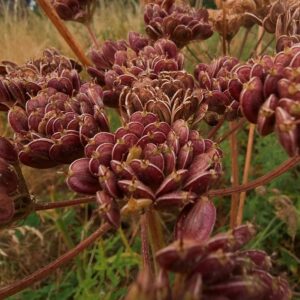
Hogweed looks like a much larger relative of the cow parsley! It has a similar umbrella of white flowers, but grows up to two meters tall. It has a thick, hollow stem with coarse hairs. The flower heads are flat and often described as a classic “Queen Anne’s lace”. The flower head is made up of smaller heads with white flowers which sometimes have a slightly pink tinge.
It is called hogweed because it was often used as swine food, but in some parts of the world, particularly in Eastern Europe, it was used as an aphrodisiac to remedy impotence or infertility!
Interestingly, the Hogweed is thought to have many healing properties, including antioxidant, antimicrobial, anti-inflammatory and antidiabetic properties.[1] Essential oil made from common hogweed can have a sweet, slightly floral aroma and documented antimicrobial properties, according to a 2003 study.[2]
Summer is a great time to forage for hogweed because it has plenty of seeds and they have a beautiful spicy taste. If you crush the seeds they smell like cardamom and aniseed! They can be collected in July and August and then used as a spice similar to cardamom and aniseed. You can use them in cakes like parkin or in bread for a bit of a crunch or sprinkled on vegetable dishes to enhance the flavour.
Warning – never forage the hogweed which has purple patches or purples splashes on its stem as these are toxic. Do not touch it as it can give you large painful blisters.
Recipe: Roasted Carrots with Hogweed Seed & Lemon
This recipe serves four and the warm, citrusy aroma of hogweed seeds goes well with the sweet roasted carrots.
- 500g carrots, cut into sticks
- 2 tbsp olive oil
- 1 tsp dried common hogweed seeds, lightly crushed
- ½ tsp ground cumin
- Zest of 1 lemon
- 1 tbsp lemon juice
- 2 tbsp chopped parsley
Toss the carrots with olive oil, crushed hogweed seeds, cumin, salt, and pepper.
Roast for 25–30 minutes in an oven set to 220°C until tender and caramelized.
Toss with the lemon zest, lemon juice and parsley.
Add salt and pepper to taste, along with a sprinkling of pumpkin seeds if you have them handy.
Yarrow (Achillea millefolium)
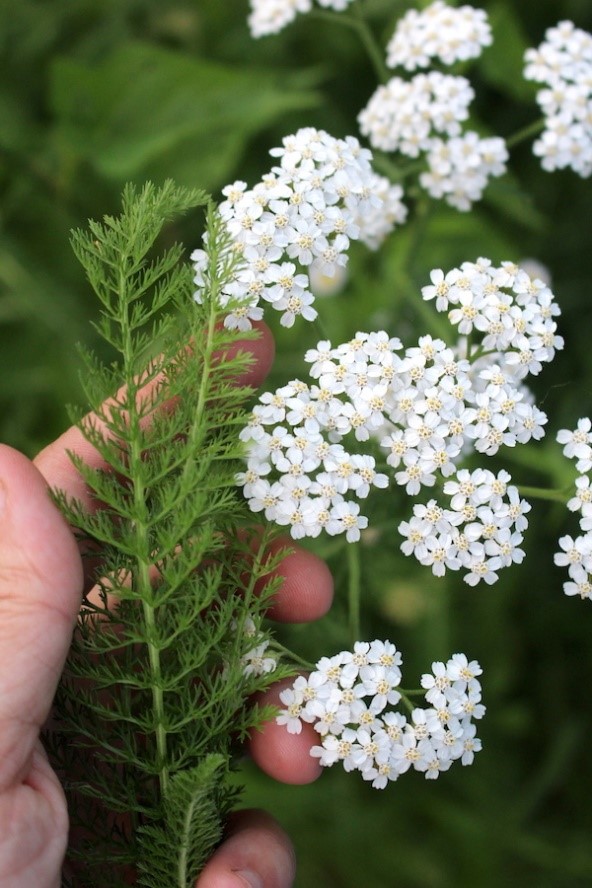
Yarrow can be found in grassy fields and meadows and along roadsides. You can recognise it by its feathery leaves and umbels of white-pink flowers and if you crush the flowers and leaves it will smell like fresh pine needles.
Yallow has long been known for its natural antibacterial, anti-microbial and anti-inflammatory properties. It was also known as soldier’s woundwort and staunchweed because it was so effecting in stopping bleeding from wounds and nose bleeds.
Ancient Greeks and Romans used it for wound healing and cleaning by making a poultice or paste out of its plant material. In Homer’s Iliad you can read that Achilles treats the wounds of his friend with Yarrow to speed the healing and prevent infection. It might sound counter-intuitive to pack a wound with leaves, but yarrow does not cause infection, it will speed the healing process!
You can make a poultice using yarrow and hedge wound wort (which is part of the mint family with an orchid-like flower). Crush the fresh leaves and flowers and then apply them directly to cuts, bruises, or bites. Cover the wound with a clean cloth or bandage.
You can also make a Yarrow tincture for a powerful astringent that closes wounds and promotes healing. Warning: Do not take yarrow tincture if you currently have gallstones as it can bring on an attack. Yarrow is also not recommended if you are pregnant or breast-feeding.
Yarrow can also be included in a soothing herbal tea found here, but the recipe I have chosen to include in this blog is a very summery Wild Strawberry & Yarrow Ice Cream.
Recipe: Wild Strawberry & Yarrow Ice Cream
This delicate ice-cream has a fruity and herbal taste and is wonderfully cooling on a summer’s day after foraging in the hedgerows.
- 200g wild strawberries (or any strawberries you can find!)
- 250ml double cream
- 250ml whole milk
- xylitol or raw honey to taste
- 1 tbsp chopped fresh yarrow leaves
- 3 egg yolks
Gently heat the milk with yarrow leaves, making sure it does not boil . Let it steep for ten minutes before straining it. Return the milk to the heat as you add sugar, cream, and beaten yolks.
Stir constantly until the milk thickens slightly. You can use an ice cream maker to churn it or you can put it in a container and stir it every hour as it freezes to keep it creamy.
You can add the strawberries to the ice-cream maker or you can stir them in when the ice-cream is done!
If you want an even healthier ice-cream recipe which is just as delicious, you can use this no-church ice-cream recipe:
- 4 free-range eggs, separated
- 100g caster sugar (I use 80g of Xylitol instead!)
- 300ml double cream
Whisk the egg whites in a large bowl until stiff peaks form, then slowly whisk in the caster sugar or xylitol until the egg whites are stiff and glossy.
Put the yarrow leaves into the cream to add flavour. Then strain the cream to remove the leaves.
Whisk the cream in a separate bowl until soft peaks form then fold the egg yolks and your chosen flavouring into the meringue mixture until well combined.
Pour into a plastic container and freeze for at least two hours.
Broadleaf plantain Plantago major
Broadleaf plantain is plentiful along the paths of woodlands all around the UK and you will recognise it immediately. Its leaves are oval, long-stalked and ribbed and it has a long flower spike covered in tiny flowers with purple anthers.
Roman soldiers used to plant plantain along the roads they would march down because they could put the leaves in their footwear to cushion the feet and prevent blisters and friction. They also used it for healing and soothing cuts and scrapes and animal bites. Pedanius Dioscorides, a physician in the Roman Army who trained in Egypt, used plantain for its cooling, healing and softening properties. The Roman naturalist Pliny the Elder wrote about it uses as a medicine and before him Alexander the Great used plantain to cure his headaches!
You can make a poultice with plantain leaves, such as the one made by the Herbal Academy here.
You can also add plantain to your bath for a soothing soak that is also very effective for skin conditions like eczema. You can bath in plantain and oats and even add donkey milk to help cure eczema in children! A top tip is to put l eaves in a small cotton bag and tie it round the tap. This allows the water to run through the bag and is better than having leaves floating round the bath and clogging the drains!
Cleavers Galium aparine
Commonly called Sticky Willy for a reason! It clings to other plants sticks to your clothes and its tiny hooked hairs are very persistent!
The seventeenth century herbalist Nicholas Culpeper described it as good for ‘cooling the liver and helping swellings’. It is one of the first plants to appear in the spring and was traditionally used as a spring tonic to clear away the winter months by giving a gentle detox. It was used as a natural support for the lymphatic system to reduce swollen lymph nodes and help with circulation. It is also helpful if you have dry itchy or irritated skin as it is very soothing for the skin.
You can use the green leaves in recipes as a replacement or addition to spinach leaves. You can also make a refreshing drink by steeping the leaves, flowers and stems in water. It will taste like cucumber!
Even more exciting are the seeds, which you can gather in the summer and use to make coffee! There are thousands of seeds so you can pick as many as you like.
Recipe: Cleaver Coffee
Collect as many seeds as you can, then roast them on a baking tray at 180 for 45 minutes or an hour. Watch them to make sure they don’t burn. When they have cooled a bit you can grind them in the a coarse powder to use in a French press or into a fine powder that can be used as instant coffee. This wild cleaver coffee will taste and smell almost exactly like coffee and it even has natural caffeine as well!
Nettle Seeds (Urtica Dioica)
In the spring blog we made nettle soup and nettle powder. You can also forage nettles in summer and collect the seeds from the female plant! Look for the long, dangling bundles of seeds that droop downward toward the stem. Pick them when they look plump and green, not when they are dry or brown.
Nettle seeds are a superfood packed with essential nutrients including vitamins A, C, E and K, and minerals such as iron, magnesium and calcium. They have beneficial fatty acids and antioxidants that help protect cellular health and reduce inflammation. Although these seeds are little, they have big health benefits such as boosting energy and enhancing the immune system, as well as supporting mental clarity and mood. They are one of the most protein-dense wild seeds that you can forage!
To collect nettle seeds, you might like to wear gloves as the nettle can still sting. Cut the top third of the plant and hand them to dry upside down in a well ventilated spot. This should take three or four days. Once dry, snip the see clusters off and rub them together over a kitchen sieve. Put a bowl underneath the catch the seeds then store them in a glass jar in a cool, dark place. You can sprinkle the seeds over your food or add them to granola and yoghurt. They are a lovely green colour and can even be used in sweet foods as they add a very subtle nutty flavour. If you like making chocolate truffles, you can roll them in the nettle seeds for a lovely decorative effect!
Other summer foraging tips
Did you know you could eat many of the wildflowers you see on your summer foraging walks? You can use the petals of dandelions in jellies or make a dandelion honey with children! The head of the daisy is remarkably sweet, especially if you use the larger daisy heads such as the oxeye daisy, and they can be put into salads. In the past daisies were used to help heal wounds and for its anti-inflammatory effects. Many people used daisy infusions to treat colds, coughs and rhinitis, but you can also use them as a beautiful garnish in summer salads!
Honeysuckle and elderflower has edible blooms that infuse a sweet, honeyed flavour into drinks and dishes, while the dog rose gives a slightly fruity flavour! You can use them to make syrups or cordials or jellies. When you are collecting flowers, make sure to collect them in the sunshine so they are at their sweetest and best. Flowers close up and stop producing pollen in the rain!
As always, only eat the wild food that you have identified correctly. Especially with mushrooms, it can be dangerous to consume anything that will poison you. None of the wild foods in this blog are dangerous. You should also be careful about the locations you use for foraging. Busy roads or farmland will have more pollution and pesticides than woodlands or country parks.
Also, make sure you forage respectfully and leave roots in the ground for regrowth next year!
With every blessing,
Emma
Emma Maitland-Carew – Registered Nutritional Therapist
Dip.ION, mBANT, CHNC Registered Practitioner, ILM Accredited Wellbeing Coach
Certified Live and Dried Blood Analysis, Metabolic Balance® Coach, HeartMath Coach, Accredited Wellbeing Coach
References
Allen, D. E. & Hatfield, G. (2004) Medicinal plants in folk tradition: an ethnobotany of Britain & Ireland. Portland: Timber Press.
Couplan, F. (1998) The encyclopedia of edible plants of North America. New Canaan: Keats Pub.
Duke, J. A. (1985) CRC handbook of medicinal herbs. Boca Raton: CRC Press.
Grieve, M. M. (1998) A modern herbal. London: Tiger Books International.
Hatfield, G. (2008) Hatfield’s herbal: the secret history of British plants. London: Penguin.
Irving, M. (2009) The forager handbook: a guide to the edible plants of Britain. London: Ebury.
[1] The genus Heracleum: comprehensive review — anti-inflammatory, antimicrobial, antioxidant, antiviral, traditional uses. 2021.
[2] Bioactive essential oil of H. sphondylium: 1-octanol, octyl butyrate, octyl acetate; antimicrobial activity. 2003.


