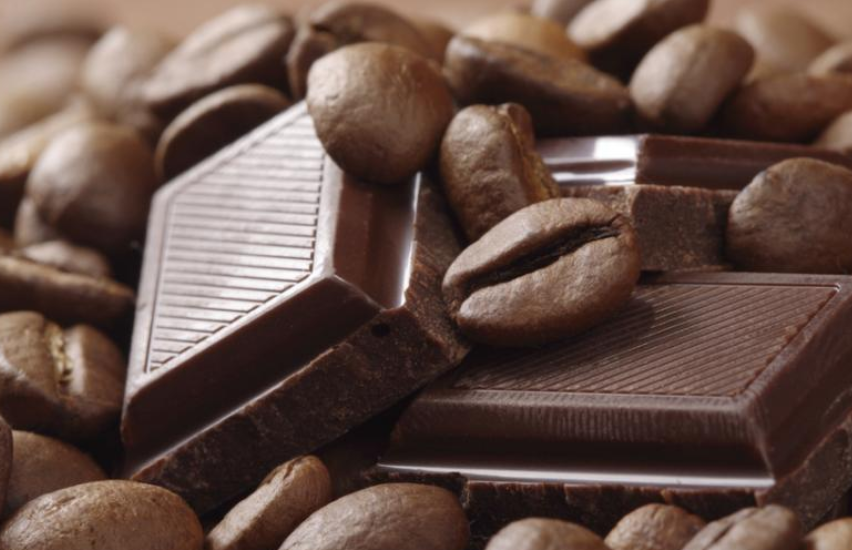
Chocolate: guilty pleasure or healthy superfood?
Easter was spectacular this year! A weekend of sunshine and balmy weather that was a fitting reminder of the redemptive hope and new life in the Easter story. I finally feel like Spring has sprung and I celebrated with good food and good times with family and friends. I hope you did the same! I hope you enjoyed all the things that make you happy and healthy…and that includes chocolate.
For many people, Easter would not be the same without chocolate. That wonderful, natural food that has a fascinating history and a whole array of health benefits. Read on to see what I mean!
Where does chocolate come from?
An array of foods and drinks have been made from cacao beans for many, many centuries. The Maya in Central America drank it as a bitter fermented beverage mixed with spices or wine and other Mesoamericans made drinks of roasted cacao beans with cornmeal, vanilla, honey and chilies.
Cacao beans from the Theobroma cacao reached Europe in the mid-1500s and since then we have used cacao as a decadent luxury, a medicinal therapeutic and an ‘essential food’ for modern lovers of chocolate.[1]
But we still do not fully understand all the health benefits!
Did you know that currently the first large-scale randomized trial in women and men has been set up to evaluate the long-term effects of a cocoa extract supplement on cardiovascular health outcomes? It is called COSMOS and could have major clinical and public health implications. You can read more about it here.
What is in chocolate?
Chocolate starts out as the dried and fermented fatty seed of the cacao tree. Once the seeds are ground, roasted, shelled and fermented, we have cacao nibs. Cocoa liquor is a paste made from the nibs and cocoa powder is made by removing some of the cocoa butter from the liquor.
To make the chocolate that we know and love, cocoa liquor is combined with cocoa butter and sugar and milk. The proportion of cocoa liquor is what determines how dark the chocolate is, with white chocolate having the least amount of cocoa (and the most milk!) and dark chocolate having the most cocoa (and the less additional ingredients).
In its original form, cacao is a mixture of fibre and protein, with many essential nutrients and polyphenols. The cacoa bean contains fatty lipids, fibre, protein, and traces of minerals such as magnesium, copper, potassium, and calcium. Interestingly, these minerals are all necessary for vascular function and reduce risk of hypertension and atherosclerosis.[2]
Magnesium in particular supports energy production, strong bones, relaxed muscles, and effective nerve transmission. Copper supports the creation of neurotransmitters and lowers the risk of cardiovascular disease.
You might be interested to know that dark chocolate (70%–85% cacao) provides 36 mg of magnesium per 100 kcal serving, which is around 10% of the recommended daily allowance (RDA) of magnesium and up to 30% RDA of copper.
if you are a client of mine and you crave chocolate, I am likely to have asked ‘which type of chocolate do you crave?’ It may seem counter-intuitive, but it is often the case that if you crave ordinary milk chocolate, it can be an indication of either a blood sugar imbalance or a milk/dairy intolerance. If you crave Kit-Kats (or chocolate containing biscuit), it can be an indication of a wheat/gluten intolerance, and if you crave dark chocolate, it can be an indication of a magnesium deficiency. Sometimes our cravings tell us more than we expect and what we are craving may not always be the best thing to put in your body.
Chocolate makes you happy…and clever!
We all know that chocolate makes you feel happy! We now know that chocolate improves our mood because of the abundance of flavonols and phenols. Flavonols release endorphins to promote feelings of well-being and serotonin which boosts mood. A single serving of dark chocolate can contain more phenolic antioxidants than most other foods.
Chocolate also contains phenylethylamine, a chemical that’s also released in the brain during moments of euphoria, and anandamide, a fatty acid neurotransmitter that makes you feel less anxious. We make dopamine from phenylethylamine and I often describe dopamine as our reward and our ‘get up and go’ (motivation) neurotransmitter. One interesting study also suggest that chocolate may improve cognitive function as well as improve mental wellbeing! A small study in 2018 suggested that flavanols in chocolate could enhance neuroplasticity, and help the brain reorganise itself, particularly after injury or disease.[3]
Chocolate makes you happy and healthy!
Some research points to a range of cardiovascular benefits, with particular focus on platelet activation, endothelium-dependent vasodilation, inflammation and blood pressure.[4]
A study published in Frontiers in Immunology in 2017 suggests that eating chocolate may have a beneficial influence on gut microbiome and encourage anti-inflammatory activity.[5] Other research suggests that cacoa can protect nerves from injury and inflammation,[6] and that it can help lower blood pressure.[7] Cocoa can also have a beneficial impact on vascular endothelium via the upregulation of nitric oxide production[8]
Finally, some research suggests that chocolate has more antioxidants than green tea or red wine! Dr Mauro Serafini from Italy’s National Institute for Food and Nutrition Research in Rome, describes dark chocolate as a potent antioxidant. [9] Antioxidants are known to eliminate free radicals, the destructive molecules that contribute to heart disease and other ailments. The antioxidant effects of cocoa may directly influence insulin resistance and, in turn, reduce risk for diabetes.
Dr Serafini is careful to point out that it is dark chocolate, not milk chocolate or dark chocolate eaten with milk, that contains beneficial antioxidants:
“Our findings indicate that milk may interfere with the absorption of antioxidants from chocolate … and may therefore negate the potential health benefits that can be derived from eating moderate amounts of dark chocolate.”
Chocolate is a healthy superfood not a guilty secret!
I hope you are happy to read of so many health benefits in chocolate! Remember to choose a bar with a minimum 70% cacao and enjoy all the benefits of this natural superfood. One or two squares of dark chocolate is a great way to satisfy a sweet craving without eating too much sugar or fat. If you pick chocolate with the minimum number of ingredients on the label, you will be less likely to get the unhealthy chocolate.
Here are a few recipes you might like to try:
- Melt dark chocolate over a low heat or in a bain-marie, stirring constantly, then drizzle the melted chocolate oatmeal, yogurt, or fresh fruit for healthy, decadent snack.
- Dip dates into dark chocolate for a sweet treat…and put a whole almond or walnut into the date first to make it even more healthy!
- Break up a few squares of chocolate into small bowls with dried fruit and nuts and serve to friends and family after dinner…or eat it by yourself as a snack.
- Dark chocolate powder can easily be added to smoothies or healthy shakes to give that extra chocolate boost!
- Blend frozen banana with dark chocolate (cacao nibs or melted block) to make all-natural chocolate ‘ice-cream’. It really is delicious and so easy to make.
With every blessing,
Emma
Emma Maitland-Carew – Registered Nutritional Therapist
Dip.ION, mBANT, CHNC Registered Practitioner,
Metabolic Balance® Coach, HeartMath Coach, Accredited Wellbeing Coach.
[1] Dillinger TL. Barriga P. Escarcega S. Jimenez M. Salazar Lowe D. Grivetti LE. Food of the gods: cure for humanity? A cultural history of the medicinal and ritual use of chocolate. Journal of Nutrition. 2000;130:2057S–7072S.
[2] Steinberg FM. Bearden MM. Keen CL. Cocoa and chocolate flavonoids: implications for cardiovascular health. Journal of American Dietary Association. 2003;103:215–223.
[3] Leyva-Soto A, Chavez-Santoscoy RA, Lara-Jacobo LR, Chavez-Santoscoy AV, Gonzalez-Cobian LN. Daily Consumption of Chocolate Rich in Flavonoids Decreases Cellular Genotoxicity and Improves Biochemical Parameters of Lipid and Glucose Metabolism. Molecules. 2018;23(9):2220. Published 2018 Sep 1. doi:10.3390/molecules23092220 https://www.ncbi.nlm.nih.gov/pmc/articles/PMC6225491/
[4] Sansone R, Rodriguez-Mateos A, Heuel J, Falk D, Schuler D, Wagstaff R, Kuhnle GG, Spencer JP, Schroeter H, Merx MW, Kelm M, Heiss C; Flaviola Consortium, European Union 7th Framework Program. Cocoa flavanol intake improves endothelial function and Framingham Risk Score in healthy men and women: a randomised, controlled, double-masked trial: the Flaviola Health Study. British Journal of Nutrition. 2015 Oct 28;114(8):1246-55.
[5] Magrone T, Russo MA, Jirillo E. Cocoa and Dark Chocolate Polyphenols: From Biology to Clinical Applications. Front Immunology. 2017;8:677. Published 2017 Jun 9. doi:10.3389/fimmu.2017.00677 https://www.ncbi.nlm.nih.gov/pmc/articles/PMC5465250/
[6] Katz DL, Doughty K, Ali A. Cocoa and chocolate in human health and disease. Antioxid Redox Signal. 2011;15(10):2779-2811. doi:10.1089/ars.2010.3697 https://www.ncbi.nlm.nih.gov/pmc/articles/PMC4696435/
[7] Ried K, Fakler P, Stocks NP. Effect of cocoa on blood pressure. Cochrane Database Syst Rev 2017;4:CD008893. See also Taubert, D. The Journal of the American Medical Association, Aug. 27, 2003; vol 290: pp 1029-1030.
[8] Katz DL, Doughty K, Ali A. Cocoa and chocolate in human health and disease. Antioxid Redox Signal. 2011;15(10):2779-2811. doi:10.1089/ars.2010.3697
[9] Serafini, M. Nature, Aug. 28, 2003; vol 424: p 1013. U.S. Department of Agriculture Nutrient Data Laboratory.